What Is Defensive Driving?
Earning your driver's license requires passing one or more tests to demonstrate your driving knowledge, from who gets the right of way to what to do when you approach a stop sign. Defensive driving techniques help you put those skills together with an approach that keeps you in control behind the wheel. Ultimately, defensive driving enables you to become a better driver, regardless of your skill level.
What Is Defensive Driving?
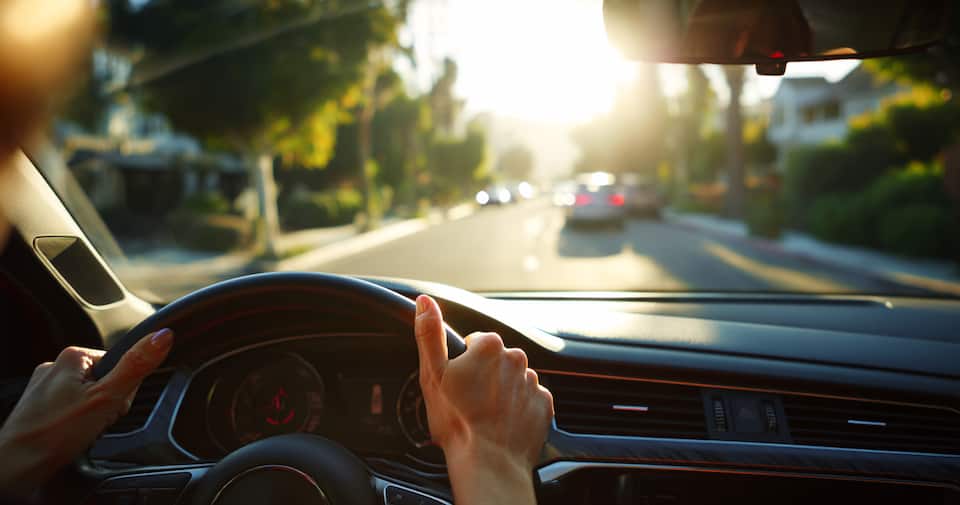
Defensive driving is a set of skills and habits that help you anticipate hazards, reduce risk, and respond safely to dangerous conditions on the road. When you drive defensively, you focus on what's happening around you and what you can control. If everyone drove defensively, it could cut down on the number of accidents that occur each year.
Defensive driving means safely responding to potential hazards, including debris on the road, other drivers, damaged road surfaces, inclement weather, and other unpredictable conditions. In practice, defensive driving takes many forms:
- Waiting five seconds after a traffic light turns green before proceeding in case another driver chooses to run the red light.
- Watching the car in the lane next to you and slowing down or honking if they come into your lane.
- Leaving extra room between your car and the car in front of you if they're tailgating the car in front of them.
In short, defensive driving means expecting the unexpected and having a plan to react. The benefits are well worth the extra effort required to stay alert behind the wheel. One of the biggest perks is avoiding an incident or accident. Driving safely can also help you get home safely, avoid getting a ticket, lower your stress levels, and potentially qualify for a discount on your car insurance.
What Defensive Driving Skills Do You Need?
Developing your defensive driving skills can help you become a better, safer driver. Use the following eight skills to hone your ability to drive defensively.
1. Practice Situational Awareness
Situational awareness means continuously scanning your surroundings to identify potential hazards before they become threats. Check your mirrors, listen for sirens, and mentally create a picture of where other cars are in relation to you, what exits you can take if necessary, and what obstacles may lie ahead.
Situational awareness also includes recognizing what you can do if the situation quickly changes. For example, if you're in a traffic jam and an accident happens a few cars up, where can you go to reroute to your destination? If you're driving behind a vehicle with items bouncing freely in the truck bed, what are your options if those objects suddenly fly toward you?
2. Go the Appropriate Speed
The appropriate speed and the speed limit are sometimes two different numbers. During ideal conditions, like on a summer day, going the speed limit may not be a challenge. Navigating the same road during winter could require you to slow down well below what's posted. It's much better to arrive at your destination late than end up in a ditch on the side of the road.
3. Maintain a Safe Following Distance
Safe following distance is the space between your car and the car in front of you that gives you enough time to stop or react. Allow more space than you think is necessary to ensure you have enough stopping distance and can pass with care. The more space you have to work with in any scenario, the better.
4. Mind Road Hazards
Although you may often focus on the cars in front of you, the road itself can throw a few curveballs your way. Keep an eye out for debris, potholes, and uneven surfaces. Driving defensively requires knowing the clearance between your car and the road, and whether it's enough to allow you to drive over an obstacle or if you need to swerve to avoid it.
5. Drive Calmly and Stay Alert
Cars are part of everyday life, which sometimes leads drivers to become too comfortable behind the wheel. Staying focused helps protect you, your passengers, and everyone else on the road.
Avoid distractions, sudden braking maneuvers, and road rage whenever possible. Stay calm and alert in the driver's seat, with your back straight and both hands on the wheel. Stay aware of your surroundings and let other drivers pass if necessary.
6. Know Driving Etiquette
Driving etiquette covers basic traffic laws and the rules of the road. Familiarize yourself with who has the right of way, what traffic lights mean when they're flashing or solid, and what you should do in the various scenarios you might encounter while driving. The same rules also cover how to avoid blind spots, what to do after an accident, and how to properly yield to emergency vehicles.
7. Avoid Target Fixation
Keeping your eye on the car in front of you is part of defensive driving, but problems can arise when you fixate on that target. You may find yourself following that vehicle even if your intended destination is in a different direction. You can also fixate on one car you think is a threat and miss another hazard developing nearby.
8. Learn Your Vehicle
One of the most important defensive driving skills is learning the mechanics of your own vehicle. How does it handle under hard braking? What does it feel like driving through rain or snow? How much stopping distance do you need? How far do you turn the steering wheel to maneuver around a tight curve? The answers to these questions are essential to developing your defensive driving skills.
Take a Defensive Driving Course
If you want to learn more about defensive driving, the National Safety Council (NSC) maintains a directory of state-certified defensive driving courses. The NSC has been offering defensive driving instruction since 1964 and has trained millions of drivers. Visit the NSC website for current course options and availability.
Practice Your Defensive Driving
Defensive driving can save your life, especially if you're constantly on the road. Practice these eight skills to stay alert and reduce your chances of being involved in a collision. Share what you've learned with friends and family to encourage others to drive defensively.
Frequently Asked Questions
Does defensive driving reduce your risk of an accident?
Yes. Defensive driving helps you anticipate hazards and react before they become dangerous. Skills like maintaining a safe following distance, scanning your surroundings, and adjusting your speed to road conditions all reduce your chances of being involved in a collision.
Can you get a car insurance discount for taking a defensive driving course?
Many insurance providers offer discounts for completing a state-certified defensive driving course. Check with your insurance company to see if you qualify and which courses they accept.
What is the most important defensive driving skill?
Situational awareness is widely considered the foundation of defensive driving. When you stay alert to what's happening around your vehicle, you give yourself more time and space to react to hazards, other drivers, and changing road conditions.
If you do find yourself in an accident, Crash Champions is here to help. Every repair is backed by a written lifetime guarantee, and our team works directly with your insurance provider to keep the process simple. Find your nearest Crash Champions location to get a free estimate.
The information in this article is provided for educational purposes and may not reflect every situation. While we strive for accuracy, this content is general guidance, not a substitute for visiting your local collision repair provider. For questions about your specific vehicle or repair needs, contact your local Crash Champions team.