How to Check Tire Tread: 4 Easy Methods
Tire tread gives your vehicle the traction it needs to grip the road safely. Most tires wear out in three to five years, depending on your driving habits, terrain, and local climate. Checking your tire tread as part of routine maintenance helps you stay safe and catch wear before it becomes a problem.
Why Tire Tread Depth Matters
Tire tread depth is the measurement of the grooves in your tires that channel water, snow, and debris away from the contact surface. Proper tire tread depth is 6/32 of an inch or more. When your tires wear down to 4/32 of an inch, you should start shopping for replacements. At 2/32 of an inch of tread, your tires have reached the end of their safe lifespan, and you risk losing traction and handling ability, especially on wet or icy roads.
Tread depth matters because those grooves are what keep your tires gripping the road in less-than-ideal conditions. In dry weather, even worn tires can maintain decent contact with the pavement. In rain, snow, or cold temperatures, however, shallow tread cannot channel water effectively, increasing the risk of hydroplaning. Keeping your tread at a safe depth helps you maintain control when conditions change.
How to Measure Tire Tread Depth
You can measure tire tread depth in several ways, from a simple coin test to a dedicated gauge. Each method takes only a few minutes per tire, and staying on top of your tread depth can help you catch uneven wear patterns that may signal alignment or inflation issues.
The Penny Test
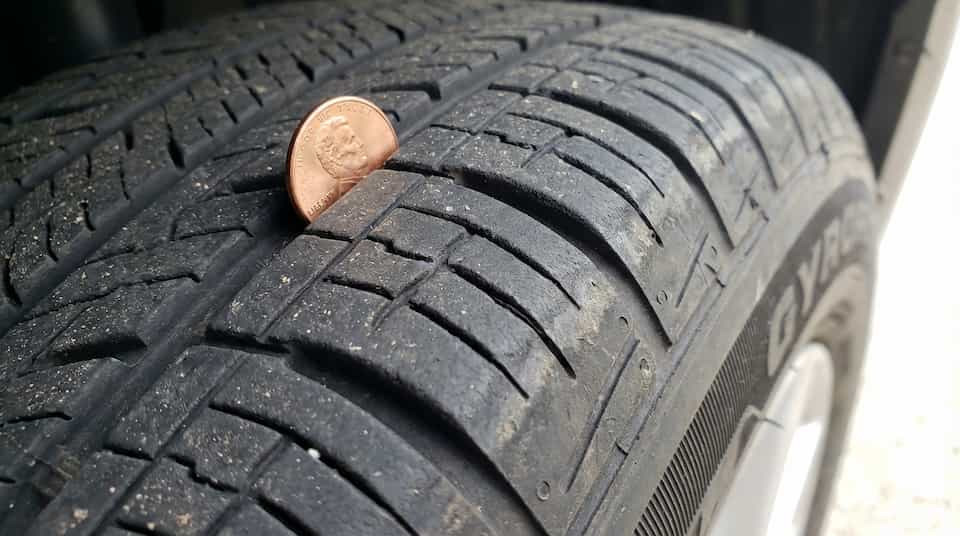
The penny test is one of the quickest ways to check whether your tire tread has worn to an unsafe level. All you need is a single penny and a few minutes.
- Hold a penny with Lincoln's head pointing down toward the tire.
- Insert the penny into the tire tread groove closest to the outside of the tire.
- Check how much of Lincoln's head is visible. If you can see the top of his head, your tread is below 2/32 of an inch, and your tires need to be replaced. If his head is partially or fully covered, your tread is still above that threshold.
- Repeat the test in at least two more grooves across the width of the tire, one near the center and one closer to the inner edge. Consistent readings indicate even wear. If the readings vary, your tires may be wearing unevenly, which can signal an alignment issue or improper tire pressure.
The Quarter Test
If your tires pass the penny test but you want a more cautious check, the quarter test measures a slightly deeper threshold. Washington's head on a quarter sits at approximately 4/32 of an inch, which is the point where many safety experts recommend scheduling replacement.
- Hold a quarter with Washington's head pointing down toward the tire.
- Insert the quarter into the tire tread groove closest to the outside of the tire.
- Check how much of Washington's head is visible. If you can see the top of his head, your tread is below 4/32 of an inch, and you should plan to replace your tires soon. If his head is covered, your tread depth is above 4/32 of an inch.
- Repeat the test in at least two more grooves across the tire's width to check for even wear. Uneven readings can point to alignment problems or over- or under-inflated tires.
Tire Tread Depth Gauge
For a more precise measurement, a tire tread depth gauge gives you an exact reading in 32nds of an inch. You can find these at most auto parts stores or online, and they are inexpensive and easy to use.
- Place the probe of the gauge into the tread groove closest to the outside of the tire. Press the shoulders of the gauge flat against the tire surface.
- Read the measurement on the gauge. New tires typically start at 10/32 to 11/32 of an inch.
- Repeat the measurement across the width of the tire to check for uneven wear patterns. Tires that show more wear in the center may be overinflated, while tires worn along the edges may be underinflated.
If you invest in a tread depth gauge, consider also picking up a tire pressure gauge. Checking both tread depth and pressure at the same time helps you maintain fuel efficiency and catch potential issues early.
Tread Wear Indicator Bars
Tread wear indicator bars are small raised bars molded into the tread grooves of modern tires. These bars sit at 2/32 of an inch, the minimum safe tread depth, and give you a quick visual reference without any tools.
- Locate the tread wear indicator bars on your tires. They are typically found at the base of the main tread grooves, spaced evenly around the tire.
- Compare the height of your tire tread to the height of the indicator bars.
- If the tread stands taller than the indicator bars, your tires are still above the minimum threshold.
- When the tread surface is flush with the indicator bars, replace your tires immediately.
Indicator bars provide a convenient at-a-glance check, but they only tell you when tread has reached 2/32 of an inch. For more precise readings or to catch wear earlier, use one of the methods above.
What Causes Uneven Tire Tread Wear?
If your tread checks reveal uneven wear across the tire width, the cause is usually one of three things: tire pressure, alignment, or seasonal tire mismatch.
- Overinflation causes the center of the tire to bulge outward, creating more wear down the middle of the tread.
- Underinflation causes the edges of the tire to carry more of the load, resulting in faster wear along both outer edges. You can sometimes spot underinflated tires on other vehicles by looking for a slight bulge where the tire meets the road.
- Misalignment causes one side of the tread to wear faster than the other. If your coin or gauge tests show a noticeable difference between the inner and outer grooves, schedule an alignment check.
- Seasonal tire mismatch can also accelerate wear. Summer or performance tires have minimal tread by design and can become dangerous in colder months. Running winter tires on dry pavement for extended periods wears them down quickly.
How Often Should You Check Tire Tread?
Check your tire tread at least once a month and before long road trips. A quick penny or quarter test takes less than a minute per tire and helps you catch wear before it becomes a safety issue. Keep a penny and a quarter in your glove box so you always have them handy.
You should also check your tread any time you notice your vehicle pulling to one side, your steering wheel vibrating, or your tires losing grip in wet conditions. These can all be signs that your tread has worn unevenly or dropped below a safe depth.
Frequently Asked Questions
How do I know when my tires need to be replaced?
If the tread depth is at or below 2/32 of an inch, your tires need to be replaced. You can check this with the penny test: insert a penny into the tread with Lincoln's head pointing down, and if you can see the top of his head, it is time for new tires. Many safety experts recommend replacing tires once they reach 4/32 of an inch, especially if you drive in wet or snowy conditions.
Can uneven tire wear damage my car?
Yes. Uneven tire wear can put additional stress on your suspension and steering components, reduce your ability to brake effectively, and make your vehicle harder to control. If you notice uneven wear, have your alignment and tire pressure checked to prevent further issues.
Is the penny test accurate for checking tire tread?
The penny test is a reliable quick check for determining whether your tread has worn below 2/32 of an inch. For a more precise measurement, use a tire tread depth gauge, which gives you an exact reading in 32nds of an inch.
Stay Safe with Routine Tire Checks
Checking your tire tread regularly is one of the simplest ways to keep your vehicle safe on the road. If you notice uneven tire wear or suspect your vehicle may need an alignment after a collision or impact, Crash Champions can help. Find your nearest location to schedule a free estimate.
The information in this article is provided for educational purposes and may not reflect every situation. While we strive for accuracy, this content is general guidance, not a substitute for visiting your local collision repair provider. For questions about your specific vehicle or repair needs, contact your local Crash Champions team.