How to Maintain Your Car's Suspension System
Your car's suspension absorbs road impacts, keeps your tires in contact with the pavement, and gives you a stable, comfortable ride. Like any system with moving parts, it needs regular attention to stay in good working order. Here is what you can do to keep your suspension performing at its full potential.
How to Maintain Your Car's Suspension System
Car suspension maintenance involves regular inspections, proper tire care, keeping components clean, respecting your vehicle's weight limits, and replacing worn parts promptly. Your suspension system uses springs, shock absorbers, control arms, and other components to keep your vehicle centered, stable, and free from jarring vibrations so you can enjoy a safe and comfortable ride. It also serves as a structural mounting point for the wheels and steering system. Use the guide below to maintain your car's suspension, just as you would the engine, tires, and other critical systems.
Regularly Inspect the Suspension System
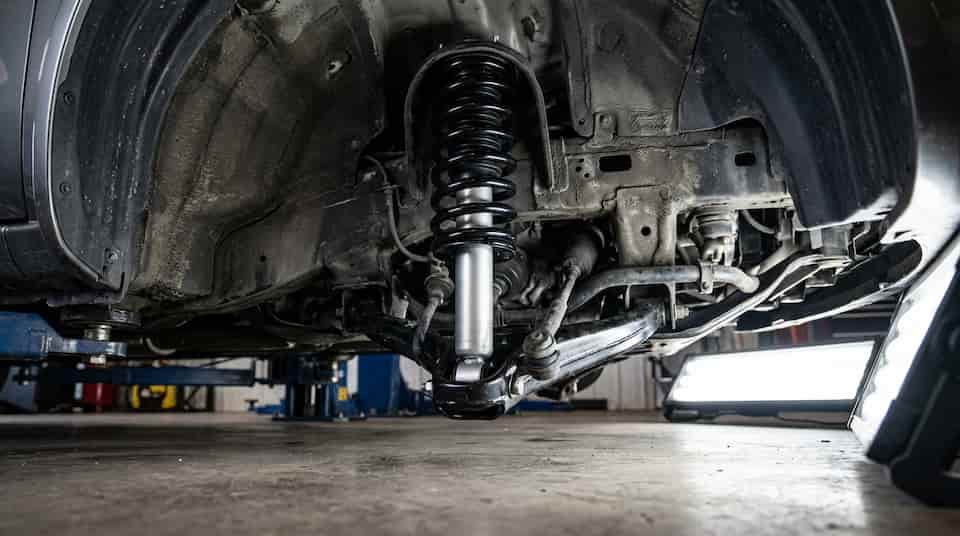
Unlike your engine, the suspension system does not always give you obvious warning signs when something starts to wear. Minor problems can go undetected if you are not routinely checking the components beneath your vehicle. Each time you are under the car or have the wheels removed, give your suspension a once-over. Look for leaking fluid on the shocks, cracked rubber bushings, loose bolts, and any visible damage to springs or control arms.
Maintain Your Tires
Your tires are the only point of contact between your vehicle and the road, and they directly affect how your suspension performs. Make sure you purchase, mount, rotate, and balance the correct tires for your car. Monitor tire pressure, tire tread depth, and wheel alignment regularly. Misaligned wheels or uneven tire wear can put extra stress on suspension components and shorten their lifespan.
Clean Suspension Components
Keeping your suspension components clean helps them move smoothly as you drive. Sand and grit trapped between leaf springs can interfere with their compression, and dirty rubber bushings can reduce their flexibility. The next time you wash your car, spray the underside thoroughly to remove road debris, salt, and buildup.
Stay Within the Recommended Weight Limit
Your car's suspension is engineered to support a specific load, including the vehicle's own weight plus passengers and cargo. Exceeding your vehicle's gross vehicle weight rating (GVWR), which you can find on the driver's side door jamb sticker, puts undue stress on springs, shocks, and other components. The longer your suspension operates under strain, the more likely you are to experience premature wear and potential failure.
Replace Worn or Broken Parts
Worn suspension components can compromise your vehicle's handling and stopping ability. Failed parts like a broken spring or leaking shock absorber can affect steering control and increase braking distance. While your budget understandably influences how quickly you can address repairs, replacing worn suspension parts as soon as possible helps prevent further damage and keeps you and other drivers safe.
Avoid Road Hazards
As part of your daily driving habits, steer clear of potholes, speed bumps taken at high speed, and curbs whenever it is safe to do so. Aggressive driving and repeated hard impacts take a toll on suspension components over time. That said, always prioritize safe driving. It is better to absorb a pothole than to swerve into another lane.
Why Is Suspension System Maintenance Important?
Suspension maintenance is important because it directly affects your vehicle's handling, ride comfort, and safety. The complex geometry of your car's suspension controls how your tires contact the road and how much of the road's uneven surface you feel inside the cabin. Think of it like the joints and bones in your body: when they are healthy, you move fluidly, but when they stiffen or wear down, every movement becomes harder.
A well-maintained suspension keeps your fuel efficiency steady, extends the life of your tires and other components, and helps you stay in control during sudden maneuvers or emergency braking. Neglecting your suspension can lead to uneven tire wear, increased bouncing, longer braking distances, and poor handling that could increase your risk of an accident.
Components of Your Vehicle's Suspension System
Your vehicle's suspension is made up of several interconnected parts, each playing a specific role in ride quality and handling. Your power steering system also influences the suspension because the steering rack moves suspension components to turn your wheels. Below are the main parts of your vehicle's suspension system.
Springs
Leaf springs, coil springs, and torsion bars compress or stretch in response to the road's surface. These components support your vehicle's weight, absorb impacts from bumps and dips, and help your tires maintain consistent contact with the road.
Shock Absorbers
A shock absorber (often called simply a "shock") uses a piston moving through hydraulic fluid or gas to dampen the up-and-down motion created by your springs. When you go over a bump and your car settles quickly instead of continuing to bounce, your shocks are doing their job.
Struts
A strut combines a shock absorber and a coil spring into one unit, serving as both a structural component and a dampener. Most modern vehicles use struts in the front suspension and separate shocks in the rear. Struts are compact and fit well in the limited space near the front wheels.
Control Arms
Control arms connect the wheel assembly to the vehicle's frame, maintaining proper alignment while allowing the wheels to move up and down over bumps. Your car may have a single control arm per wheel or upper and lower control arms in what is called a double-wishbone configuration.
Ball Joints
Ball joints are ball-and-socket connections that allow smooth, multi-directional movement between the control arms and the steering knuckles. They are critical pivot points that wear over time and should be inspected regularly.
Anti-Roll Bar
Also known as a stabilizer bar or sway bar, the anti-roll bar connects opposite sides of your car's suspension. It reduces body roll during cornering, keeping the vehicle more level and improving stability.
Bushings
Bushings are flexible rubber or polyurethane components that fit between suspension parts. They reduce friction, absorb vibrations, and allow controlled movement of the connected components. Worn bushings often produce clunking or squeaking noises over bumps.
Steering Knuckles
The steering knuckle connects the wheel hub to the suspension, providing the pivot point that allows the wheel to turn when you steer.
Tie Rods
Tie rods connect the steering rack to the steering knuckles, transmitting your steering input to the wheels while still allowing suspension movement.
Symptoms of Worn Suspension
Even with proper maintenance, suspension components wear down over time. Recognizing the symptoms early helps you address problems before they affect your safety. Here are common signs your suspension may need attention:
- Drifting or pulling during turns: Your vehicle leans excessively or pulls to one side when cornering.
- Oily or greasy shocks and struts: Fluid leaking from a shock or strut means it can no longer dampen movement effectively.
- Uneven tire tread wear: Irregular wear patterns can indicate alignment issues caused by worn suspension parts.
- Excessive nose-diving when braking: If the front of your car dips noticeably when you apply the brakes, your shocks or struts may be worn.
- A rougher ride than usual: If you feel bumps more than you used to, your suspension components may be losing their ability to absorb impacts.
You can also perform a simple bounce test: press down firmly on the hood or trunk of your car and release. If the vehicle bounces more than two times before settling, your shocks or struts likely need to be inspected or replaced.
Frequently Asked Questions
How often should you inspect your car's suspension?
Inspect your suspension components any time you have your wheels removed, such as during tire rotations or brake service. As a general guideline, check your suspension at least twice a year or whenever you notice changes in ride quality, unusual noises, or uneven tire wear.
How long do suspension components typically last?
Most shock absorbers and struts last between 50,000 and 100,000 miles, though this varies depending on your driving conditions, road quality, and vehicle type. Ball joints, bushings, and tie rod ends can wear at different rates. Regular inspections help you catch wear early so you can plan replacements before components fail.
Can a collision affect your car's suspension?
Yes. Even a minor collision or impact with a large pothole can bend, crack, or misalign suspension components. If your vehicle pulls to one side, rides differently, or makes new noises after an impact, have your suspension inspected by a professional to make sure everything is still within specification.
Keep Your Suspension in Shape
Your vehicle's suspension is a vital part of its handling, comfort, and safety. By keeping up with routine inspections and addressing wear early, you can extend the life of your suspension and enjoy a smoother, safer ride. If your vehicle's suspension has been affected by a collision or impact, Crash Champions can help assess the damage and get you back on the road. Find your nearest location to schedule a free estimate.
The information in this article is provided for educational purposes and may not reflect every situation. While we strive for accuracy, this content is general guidance, not a substitute for visiting your local collision repair provider. For questions about your specific vehicle or repair needs, contact your local Crash Champions team.