How to Check Your Car's Oil Levels
Engine oil lubricates the critical internal metal components that power your vehicle and keep it running smoothly. In addition to routine oil changes, regular checks of your car's oil levels help ensure those vital parts stay protected for miles to come. Spending a few minutes checking your oil can save you hundreds, if not thousands, of dollars at the repair shop.
The Importance of Engine Oil
Engine oil keeps your vehicle's internal components running smoothly by reducing friction, heat, and sludge buildup. From pumping pistons to valves opening and closing at specific intervals, your engine relies on many mechanical parts working together. Oil protects against engine wear and keeps those parts interacting without the damaging effects of metal-on-metal contact. Without oil, your car's engine can seize up in a matter of minutes.
Oil, like many other types of automotive fluids, deteriorates over time. Dirt and debris from several sources can contaminate the engine oil and reduce its performance. Water can dilute the oil, and any other fluids from your vehicle (such as coolant) mixing with the oil can quickly lead to engine failure.
How to Check Your Car's Oil Level
To check your car's oil level, park on level ground, let the engine cool, and pull the dipstick from the engine bay. Wipe it clean, reinsert it, then pull it out again to read where the oil line falls between the "L" (low) and "H" (high) markings. This process takes about five minutes and requires no special tools.
Check your car's oil levels every one to four weeks, depending on your driving habits and conditions. Do not wait until your oil light comes on, because at that point your car could be running dangerously low on oil, the oil pressure could have dropped, or you could have a leak. If this light does come on, shut off your engine immediately and add oil before driving again.
Here are the steps to check your car's oil levels:
- Make sure your car is cool to the touch, parked on level ground, and you have a rag or paper towel on hand.
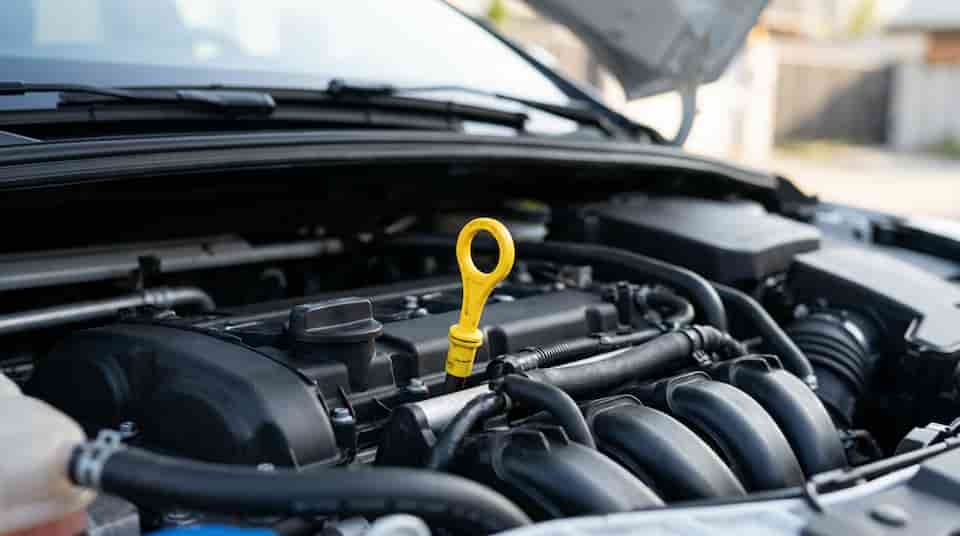
- Pop the hood and locate the dipstick near the center of the engine bay. The dipstick handle is typically a yellow, red, or black loop. (Note: the oil filler cap, often marked with an oil lamp symbol, is where you add oil to the engine.)
- Slowly remove the dipstick and wipe off any oil with your rag, then reinsert it fully. Count to 10, and pull it out again.
- Notice where the streak of oil ends on the dipstick. Most dipsticks use an "H" and "L" (for "high" and "low") or MIN/MAX markings to indicate oil levels. Between these endpoints, you will typically find a crosshatched section that shows oil levels are within an acceptable range.
- If you are unsure of your reading or want to double-check, repeat step 4.
- If the oil level is low, add one-half quart at a time. Do not overfill your car's engine with oil.
- Keep track of your motor oil levels over time and note how often you need to top up. If you are constantly adding oil, schedule an appointment with a qualified repair professional to check for leaks or other issues.
Oil Life Monitoring Systems
An oil life monitoring system is an onboard feature in many newer vehicles that tracks the condition and remaining useful life of your engine oil. While checking the dipstick tells you how much oil is in the engine, an oil life monitor tells you how much life your oil has left before it needs to be changed.
You can learn more about how your vehicle's oil life monitoring system works by referencing your owner's manual. The two basic types of oil life monitoring systems include:
- Algorithm-based: The system measures various parameters, such as engine temperature, RPM, and driving patterns, and feeds them into a formula that tells you when the oil is still in good condition, needs changing soon, or requires immediate replacement.
- Direct measurement: This type of system tests the oil itself, measuring properties like conductivity, soot concentration, water content, and viscosity to determine oil condition in real time.
Oil life monitoring systems often align with your vehicle's recommended oil change mileage intervals. For instance, the system should account for the manufacturer's recommendation of changing your oil every 5,000 miles if that is what the owner's manual specifies.
How to Add Engine Oil
Some cars burn a small amount of oil as a normal part of engine operation. If you need to add oil, start with about half a quart. Locate the oil cap on your engine (usually marked with an oil lamp symbol) and twist it off.
Use a funnel to pour the oil into the opening, and monitor how much you add. It is much easier to add more oil than to remove it if you overfill. Overfilling your engine with oil can be just as harmful as running it low, so check your oil level with the dipstick after adding oil and letting it settle for a moment.
Conventional, Synthetic Blend, and Full Synthetic Oil
Use the specific type of oil your car's manufacturer recommends, whether you are topping off or performing a full oil change at the recommended interval. Oils are differentiated by weight, such as 0W-30 and 5W-40. The three main types of motor oil include:
- Conventional: The most common and affordable option, but it requires more frequent oil changes compared to synthetic options.
- Synthetic blend: A mix of conventional and synthetic oils that lasts longer than conventional, costs less than full synthetic, and offers improved performance.
- Full synthetic: Engineered for increased resistance to high heat and oxidation, full synthetic oil costs more but tends to last longer and provides strong protection for modern engines.
You can find the specific type of oil required for your vehicle in your owner's manual. Auto parts stores can also determine the right oil based on the manufacturer's recommendations for your car if you do not have an owner's manual available.
Frequently Asked Questions
How often should you check your car's oil level?
Check your car's oil level every one to four weeks, depending on how often and how far you drive. More frequent checks are a good idea if your vehicle is older or if you regularly drive in stop-and-go traffic, extreme temperatures, or dusty conditions.
What does it mean if your oil is dark or gritty?
Dark or gritty oil is a sign that your oil has accumulated dirt, debris, or combustion byproducts and may be nearing the end of its useful life. If your oil looks very dark or feels gritty between your fingers, schedule an oil change soon to keep your engine protected.
Can you mix conventional and synthetic oil in an emergency?
Yes, you can mix conventional and synthetic oil in a pinch without damaging your engine. However, mixing reduces the performance benefits of synthetic oil. Top off with the type your manufacturer recommends and schedule a full oil change at your next service interval.
Keep Your Engine Protected with Regular Oil Checks
Maintaining the proper oil level in your vehicle takes just a few minutes and can prevent costly engine repairs down the road. If your vehicle has been in a collision and you want to make sure all fluids and mechanical systems are in proper working order, Crash Champions can help. Find your nearest location to schedule a free estimate.
The information in this article is provided for educational purposes and may not reflect every situation. While we strive for accuracy, this content is general guidance, not a substitute for visiting your local collision repair provider. For questions about your specific vehicle or repair needs, contact your local Crash Champions team.