How Do Roundabouts Work?
Did you know that the first modern roundabouts in the United States were constructed in Nevada in 1990? Yet, even after more than 30 years, roundabouts still give many drivers trouble in determining how to navigate them. If you've never driven through a roundabout before or just want a refresher course on the subject, the following guide to roundabouts includes all the tips you need to make your experience a positive one.
What Is a Roundabout?
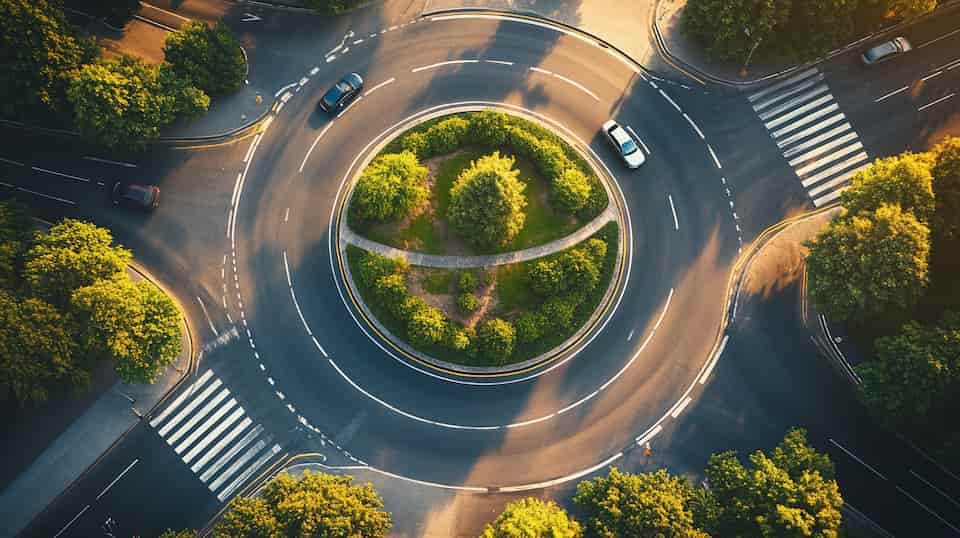
A roundabout is a circular intersection where traffic flows in one direction around a central island, eliminating the need for traffic signals or stop signs. From a bird's-eye view, roundabouts (also called traffic circles) look a bit like the spokes of a wagon wheel, complete with a full inner circle and pathways splitting off at various points. Always found where two or more roads meet, roundabouts are not controlled by traffic signals. Instead, drivers follow specific rules to safely navigate through this circular intersection and reach their destination.
The purpose of a roundabout is to minimize the number of left turns drivers must make and keep traffic flow moving in a steady pattern. Left turns often put drivers directly in the path of oncoming traffic. Roundabouts manipulate the flow of traffic to optimize right turns instead.
All roundabouts in the United States function in a counterclockwise motion. The entrances of roundabouts are clearly marked by traffic signs that indicate how many lanes there are and which lanes lead where. A yield sign often stands at the entrance of the roundabout at each point to indicate to drivers that they must yield to whoever is in the roundabout at that time, but are not required to stop.
Who Has the Right of Way in a Roundabout?
Vehicles already circulating inside the roundabout always have the right of way over vehicles waiting to enter. A good rule of thumb is to stick to the outside roundabout lane unless you have plenty of room and time to change lanes to position your vehicle to exit. In many cases, the second lane of multi-lane roundabouts exists for larger vehicles needing extra space to turn efficiently. Note that you don't have to stop before entering a roundabout if it's empty of circulating traffic, but it's always a good idea to slow down and be aware of your surroundings before assuming no other cars are present.
Pedestrians always have the right of way in a roundabout, so yield to them if they're present and crossing your path. If you approach a roundabout and see a car pull up on your left, yield to them before entering the roundabout yourself. Before you pull out into the roundabout, make sure no one is to your right or that they've at least stopped to let you go by.
How to Navigate a Modern Roundabout
Roundabouts most commonly have four exits. If you ever follow navigational instructions that say something like, "Take the second exit," you begin counting the exits by starting at the one closest to your right. Here are the four basic maneuvers:
- Turning right: Take the first exit.
- Going straight: Take the second exit.
- Turning left: Pass the first two exits and take the third.
- Making a U-turn: Pass all exits and return to your entry road.
Turning Right
If you're approaching a four-way roundabout, turning right means taking the first exit. Approach the roundabout cautiously, slowing down to give yourself time to assess the situation. If no cars are approaching from the left and you're clear to continue forward, enter the right lane. Signal right and exit the roundabout to continue your journey.
If there is a car present on your left as you approach the roundabout, stop and allow them to finish using the roundabout before you enter. Proceed with caution when you feel safe to do so and no pedestrians are crossing your path.
Going Straight
The same basic rules apply if you plan to go straight through the roundabout. Stay to the right and exit via the second exit, signaling to other drivers that you're turning before you do so. Look ahead to your turn to avoid hitting any crossing pedestrians, as they have the right of way at all times.
Turning Left
Repeat the same basic procedures as turning right or going straight, except you'll continue past the first two exits. Rather than navigate the roundabout clockwise by driving in the wrong direction, follow the counterclockwise flow around the center, passing the right and straight exits before taking your left. Since you'll be in the roundabout longer, keep an eye on other drivers before exiting.
Making a U-Turn
If you need to make a U-turn, roundabouts are the easiest way to pull off this maneuver. Skip all three exits and return to the path you just came from, exiting to head in the opposite direction. This is also the solution if you missed your exit, just continue around the circle. Never execute a U-turn by driving against the flow of traffic.
Other Roundabout Tips to Keep in Mind
Practicing how to navigate a roundabout can help you develop the skills necessary to traverse these intersections confidently. You're bound to make a few mistakes when you first drive through one, including the following:
- Failure to yield per roundabout rules
- Pacing another vehicle while in the roundabout
- Failure to maintain proper following distance
- Changing lanes midway through the roundabout
For many drivers, mastering roundabouts means learning to anticipate the actions of other drivers. Look at the direction in which the oncoming vehicle's tires are pointed and gauge how much time you need to enter traffic. Avoid switching lanes in the middle of the roundabout, even if you think you're the only one in it.
Don't Let Roundabouts Drive Circles Around You
Like parallel parking, merging into highway traffic, and obeying any other traffic rules, successful roundabout navigation requires practice. Incorporate roundabouts into your driving lessons or daily driving routes to familiarize yourself with how they work. After a few trips around the roundabout, you're bound to find them preferable over idling and waiting for a green light at your typical traffic light.
Whether you're navigating a roundabout or recovering from a fender bender, Crash Champions is here to help. Find your nearest Crash Champions location to schedule your free estimate today.
Frequently Asked Questions
Do you have to stop at a roundabout?
You do not have to stop at a roundabout if no traffic is circulating inside it. Slow down as you approach, yield to any vehicles already in the roundabout, and enter when it's clear.
What happens if you miss your exit in a roundabout?
If you miss your exit, stay in your lane and continue around the roundabout until you reach it again. Never reverse or drive against the flow of traffic to correct a missed exit.
Are roundabouts safer than traffic lights?
Studies show roundabouts reduce serious injury crashes by up to 80% compared to traditional intersections because they eliminate head-on and high-speed right-angle collisions. Their lower speeds and one-way traffic flow make them one of the safest intersection designs.
The information in this article is provided for educational purposes and may not reflect every situation. While we strive for accuracy, this content is general guidance, not a substitute for visiting your local collision repair provider. For questions about your specific vehicle or repair needs, contact your local Crash Champions team.