How to Jump-Start a Car: A Step-by-Step Guide
A dead car battery can bring your day to a sudden stop. Unlike other mechanical issues, a dead battery can sometimes be recharged on the spot so you can get back on the road. Knowing how to jump-start a car safely is a valuable skill, and this guide walks you through every step.
How Does a Car Battery Work?
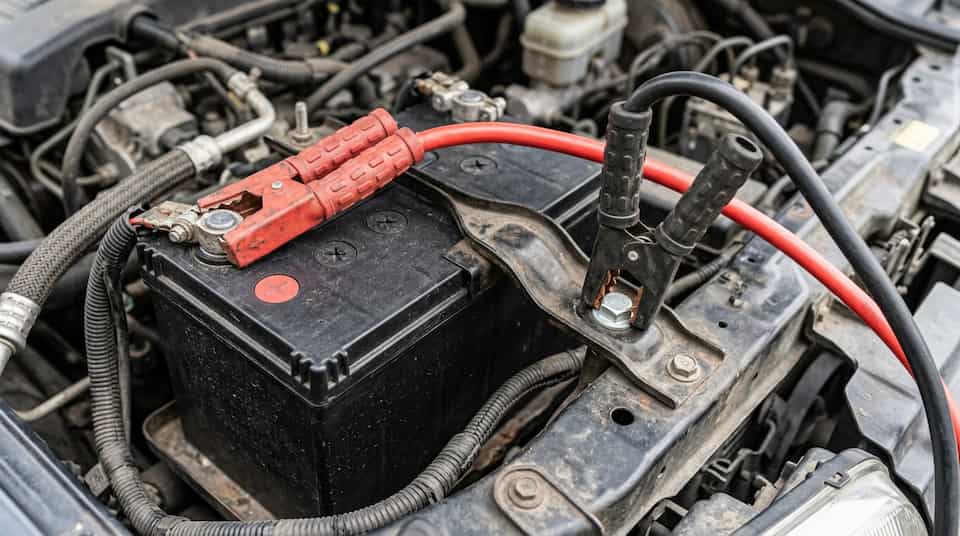
Before you can safely jump-start your car, it helps to understand the systems and components you will be working with. A car battery stores electrical energy and can be a hazard if handled incorrectly, so a little knowledge goes a long way.
Most modern cars rely on a 12-volt battery to power everything from the starter motor that cranks the engine to the headlights and interior climate control. The battery provides the initial burst of power, and the alternator recharges it while you drive. If something drains enough energy from your battery or the battery loses its charge, you are often left with a car that will not start.
Some warning signs of a weak battery include a clicking noise when you turn the key, a slow engine crank, or dim headlights. Many cars also have a dashboard battery light that turns on when the charge drops below a certain level. Since most car batteries last three to five years, replacing your battery at least once during ownership is common.
How to Jump-Start a Car: Step-by-Step
Jump-starting a car means using a charged battery (from another vehicle or a portable jump starter) to temporarily power a dead battery so the engine can start. The following steps walk you through the process safely. Keep in mind that hybrid and electric vehicles may have multiple batteries, so check your owner's manual to confirm which battery to jump. If you are unsure at any point, calling a roadside assistance service is the safest option.
1. Gather Materials and Safety Gear
Before you begin, put on gloves and safety glasses if you have them. You will also need a set of jumper cables long enough to reach between the two batteries. Inspect the cables before use and make sure the clamps and insulation are free from damage or corrosion.
2. Position the Vehicles
Park the vehicle with the working battery close enough to the dead car so the jumper cables can comfortably reach both batteries. Open both hoods and locate each battery. Remove any plastic covers to access the positive (+) and negative (-) battery terminals.
Do not attempt a jump-start if the dead battery appears frozen, swollen, cracked, or leaking. Avoid smoking or creating sparks near either battery.
Turn off all accessories (lights, radio, climate control) in both vehicles and engage the parking brakes. If the dead car has an electronic parking brake that will not engage due to lack of power, place a wheel chock or sturdy object behind a tire to prevent rolling.
3. Connect the Jumper Cables in the Correct Order
The order in which you connect the cables matters for safety. Follow these four steps carefully, and never let the positive and negative clamps touch each other once any clamp is attached to a terminal.
- Red clamp to the dead battery's positive (+) terminal. Attach one red (positive) clamp to the positive terminal on the dead battery.
- Red clamp to the working battery's positive (+) terminal. Attach the other red (positive) clamp to the positive terminal on the working battery.
- Black clamp to the working battery's negative (-) terminal. Attach one black (negative) clamp to the negative terminal on the working battery.
- Black clamp to unpainted metal on the dead car. Attach the other black (negative) clamp to an unpainted metal surface in the dead car's engine bay, such as a bolt or bracket on the engine block. Do not connect it directly to the dead battery's negative terminal, as this can cause sparking near the battery.
Start the vehicle with the working battery and let it run for two to three minutes. Then attempt to start the car with the dead battery. If the battery has had enough time to accept a charge, the engine should turn over. If it does not start on the first try, let the working car run for another five to ten minutes before trying again.
4. Remove the Jumper Cables
Once the dead car starts, remove the jumper cables in the reverse order of how you connected them. Start with the black clamp on the previously dead car's engine bay, then the black clamp on the working battery, followed by the red clamp on the working battery, and finally the red clamp on the now-running car. Keep the clamps separated at all times. Let your car idle for a few minutes before driving.
5. If the Car Still Will Not Start
If your car does not start after a jump attempt, a few things could be the cause. The donor vehicle may not have provided enough charge, especially if it has a smaller battery. The dead battery may also be too old or too damaged to hold a charge, in which case it needs to be replaced. If repeated attempts do not work, your safest option is to call a tow service or roadside assistance.
Using a Portable Jump Starter
A portable jump starter is a compact, rechargeable battery pack you can keep in your vehicle for emergencies. To use one, connect the jump starter's positive lead to the dead battery's positive terminal and the negative lead to an unpainted metal surface in the engine bay. Then follow the manufacturer's instructions to start the device and attempt to start your car. Keeping a portable jump starter charged and stored in your trunk is a practical way to prepare for an unexpected dead battery.
What to Do After Jump-Starting Your Car
After a successful jump-start, drive your car for at least 15 to 20 minutes so the alternator can recharge the battery. You can also visit an auto parts store to have the battery tested. A battery test will tell you whether your battery still holds a reliable charge or if it is time for a replacement.
Cleaning corrosion from the positive and negative terminals with a wire brush and a baking soda solution can also help extend your battery's life. If you plan to store your vehicle for an extended period, a battery trickle charger (a device that delivers a slow, steady charge) can keep the battery from draining while the car sits unused.
Stay Prepared Behind the Wheel
Knowing how to jump-start your car is one of those skills you hope you never need but are glad to have when the time comes. Keep a set of jumper cables or a portable jump starter in your vehicle, and you will be ready to get back on the road or help another driver in need.
If your vehicle has been in a collision and you are dealing with electrical issues or battery damage, find your local Crash Champions repair center to have your vehicle inspected by a certified technician.
Frequently Asked Questions
Can jump-starting a car damage the battery or electrical system?
When done correctly using the proper cable connection order, jump-starting is safe for both vehicles. Connecting the cables in the wrong order or letting the clamps touch can cause electrical damage, so always follow the steps carefully and consult your owner's manual for any vehicle-specific instructions.
How long should you drive after jump-starting your car?
Drive for at least 15 to 20 minutes after a jump-start so the alternator can recharge the battery. If the battery dies again shortly after, it may be too old to hold a charge and likely needs to be replaced.
What is the correct order for connecting jumper cables?
Connect the red (positive) clamp to the dead battery first, then the red clamp to the working battery, then the black (negative) clamp to the working battery, and finally the black clamp to an unpainted metal surface in the dead car's engine bay. Reverse this order when disconnecting.
The information in this article is provided for educational purposes and may not reflect every situation. While we strive for accuracy, this content is general guidance, not a substitute for visiting your local collision repair provider. For questions about your specific vehicle or repair needs, contact your local Crash Champions team.