How to Navigate Flooded Roads Safely
Flooded roads are a serious safety hazard for drivers, regardless of how off-road-ready your vehicle may be. You can put yourself in greater danger by driving on a flooded road without understanding the risks involved. Use this guide to learn how to handle flooded roads safely, or how to avoid them altogether.
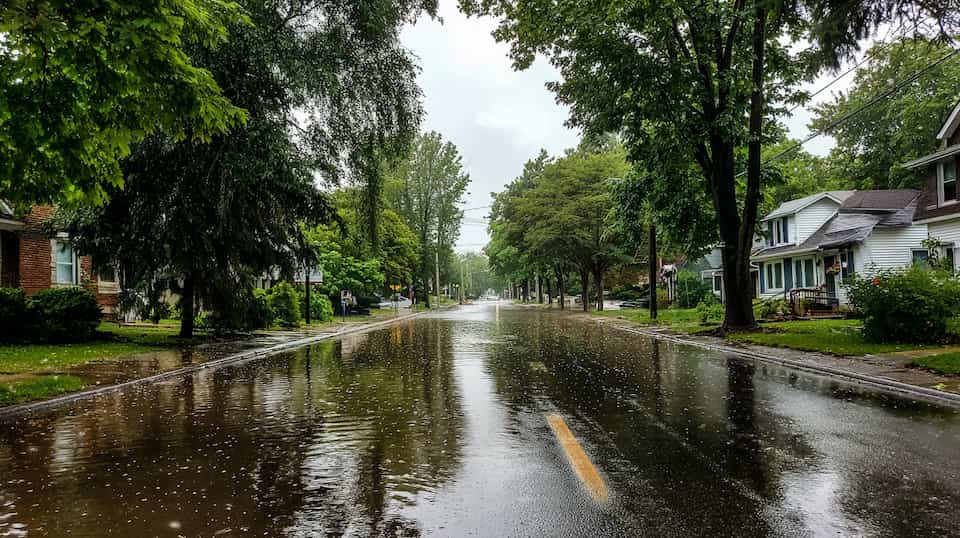
Should You Drive on Flooded Roads?
No. You should not drive on flooded roads unless it is an absolute emergency. Even a few inches of moving water can sweep a vehicle off the road, and standing water can hide hazards you cannot see. Your life could depend on making the right call.
If you must drive on flooded roads, plan your exit strategy before you get behind the wheel. Decide in advance when you will leave the vehicle and move to safety. If you get stranded, do not stay in the car. Leave the hood closed, abandon the vehicle, and head for higher ground.
Many drivers underestimate the dangers of flooded roads because they assume they are simply driving through a large puddle. In reality, that water can conceal sharp objects, deep holes, and uneven terrain. Water can also flood your engine and leave you stranded, potentially in an area with no shelter or safe ground nearby.
In floodwaters caused by hurricanes or tropical storms, the water itself may carry an electrical current. That current can travel through your vehicle and cause electrocution. Electrified water may or may not be visible to the naked eye, depending on the weather conditions.
How to Drive on Flooded Roads
The first step in avoiding flooded areas is monitoring the weather forecast and any road closures in your area. If forecasters predict a storm or hurricane, prepare or evacuate as advised so you can avoid driving through floodwaters entirely. However, if you find yourself on roads with standing water, the following steps can help you reach your destination safely.
Prepare Yourself and Your Vehicle
You may need to leave your vehicle quickly, so be ready. Plan a few escape routes before you start driving. Common exit points include the windshield and side windows.
After starting your vehicle, turn on your headlights and fog lights if your vehicle has them. Keep important belongings and supplies within reach in case you need to leave quickly. Test your brakes to confirm they are working properly and get a feel for their responsiveness.
Drive With Caution
Use your defensive driving skills by staying alert and focused on the road ahead and your immediate surroundings. Drive slowly with both hands on the wheel. If you encounter another vehicle, leave extra space between you to ensure you have enough time to stop if needed.
Pay attention to how your vehicle responds as you drive. Wet brakes often take longer to bring you to a full stop compared to dry brakes. Sudden shifts in how the vehicle handles can also signal a flat tire or uneven terrain beneath the water.
Turn Off the Air Conditioner
Stressful situations can raise your body temperature, but resist the urge to turn on the air conditioning. Keep the AC off to prevent the compressor from engaging. The compressor is vulnerable to floodwaters and could damage your engine if it fails while submerged.
Focus on Steady Movements
Driving in the center of the road can help you avoid standing or moving water that may be filling street gutters. Accelerate and brake smoothly and slowly. Avoid sudden changes in direction or speed, which can cause hydroplaning (when your tires lose contact with the road surface and ride on top of the water instead).
If you find yourself hydroplaning, stay calm. Ease off the gas to keep the vehicle moving straight. Do not slam on the brakes. Instead, pump them gently to control the skid and recover your steering.
Pay Attention to Water Depth
Standing water deeper than four inches can cause your vehicle to float rather than maintain contact with the road surface. As a quick reference, the distance from the bottom of your wheel to the tire tread is roughly four inches. If floodwaters are near this level before you start driving, stay off the road.
If you are already in your vehicle, avoid fast-moving water at all costs. A strong current can lift your vehicle off the pavement and carry it wherever the water flows. Fast-moving floodwaters can also carry sharp or heavy debris and push your vehicle into standing objects along the path.
Know When to Leave Your Vehicle
Your vehicle can help you evacuate, but it can also become a liability in severe flooding. Know when to abandon it to protect your own life. No vehicle is worth risking your safety.
If your vehicle stalls in floodwaters, get out and climb onto the roof or hood. Look for the nearest high ground and make your way toward it.
Can Electric Vehicles Drive on Flooded Roads?
Electric vehicles (EVs) can technically drive on flooded roads, but just like gas-powered vehicles, you should keep them out of the water whenever possible. Most EVs have a maximum wade depth rating, which reflects how much water the vehicle can safely pass through at slow speeds. However, the battery pack, typically located beneath the cabin at the center of the vehicle, is only temporarily sealed against water intrusion.
Think of it like a smartphone with a water resistance rating. Those ratings usually specify a maximum depth for a limited time. Beyond that limit, the electronics can short-circuit or fail. In an EV, a short-circuited battery pack can overheat, catch fire, or even explode.
When In Doubt, Wait the Flood Out
During a flood, your first responsibility is your personal safety. Driving through floodwaters increases your risk of encountering dangerous and potentially fatal conditions. Now that you understand how to navigate flooded roads more safely, use this knowledge the next time you face rising water levels. When possible, the safest choice is always to wait for the water to recede.
If your vehicle has been through a flood or sustained water damage, professional inspection and repair can help identify hidden issues before they become bigger problems. Find your local Crash Champions to schedule a free estimate and get your vehicle back in safe driving condition.
Frequently Asked Questions
How deep does water need to be to damage your car?
Water as shallow as six inches can reach the bottom of most passenger vehicles and begin to cause damage to electrical components, exhaust systems, and brake lines. At 12 inches, water can float many smaller cars. If you are unsure about the depth, do not attempt to drive through it.
What should you do if your car stalls in floodwater?
If your vehicle stalls in floodwater, do not try to restart the engine, as this can cause additional damage. Instead, exit the vehicle, climb to the roof or hood if water is rising, and make your way to higher ground as quickly as possible. Once you are safe, call emergency services for help.
Can floodwater damage be repaired?
Yes, many types of flood damage can be repaired depending on the severity. Water can affect your vehicle's electrical systems, engine components, upholstery, and structural integrity. A professional collision repair team can assess the full extent of the damage and determine the right repair plan for your situation.
The information in this article is provided for educational purposes and may not reflect every situation. While we strive for accuracy, this content is general guidance, not a substitute for visiting your local collision repair provider. For questions about your specific vehicle or repair needs, contact your local Crash Champions team.