How to Wash Your Car Without Scratching the Paint
Washing your car seems like a simple task, but the wrong approach can leave your paint covered in fine scratches. Whether you just bought a new vehicle or want to improve your car-washing routine, these 12 tips will help you keep your ride clean without damaging the finish.
12 Tips on How to Wash Your Car Without Scratching the Paint
Washing your car the wrong way can cause fine scratches and swirl marks that dull your paint over time. The following tips and techniques will not prevent every scratch your car ever gets, but the daily habits you build around car care can go a long way in protecting your vehicle's appearance and value.
1. Avoid Automatic Car Washes Unless They Are Touchless
Automatic car washes with spinning brushes are one of the most common causes of swirl marks and fine scratches on automotive paint. The brushes rotate at high speed and can drag dirt across your finish, leaving circular scratch patterns. Touchless car washes remove the main cause of swirling because nothing physically contacts your paint, but they may not clean as thoroughly as a hand wash.
2. When Using a Self-Service Car Wash, Avoid Using the Scrub Brush
A self-service car wash may seem like a good alternative to washing in your driveway, but be cautious with the equipment. The scrub brush hanging on the wall could have just as much dirt on it, if not more, as the brushes in an automatic wash. Rinsing the scrub brush before use can reduce the chances of scratching your paint, but you cannot be 100% sure it is clean unless you bring your own.
3. Remove Anything on Your Person That Could Scratch Your Car
Whether you are in your driveway or at a self-service car wash, take a moment to remove anything that could brush against your paint as you lean over the vehicle. This includes jewelry, watches, and belt buckles. The hoses attached to the rinse gun and scrub brush at the self-service car wash can also scratch your paint if they drag across it, so stay mindful of their position as you wash.
4. Use Quality Car Wash Supplies and Products
Avoid using dish soap or laundry detergent to wash your car. These household cleaners can strip wax and damage your clear coat over time. Instead, invest in a dedicated car wash soap (also called car shampoo) designed to lift dirt safely without harming your finish. You can find car wash supplies at your local auto parts store or order them online.
Your car wash shopping list should include car shampoo, glass cleaner, high-quality microfiber towels, and wax or ceramic coating for protection. A pressure washer is also a worthwhile investment if you enjoy washing your car yourself, as it delivers a stronger, more consistent rinse than a standard garden hose.
5. Avoid Washing Your Car in Direct Sunlight
Direct sunlight causes water and soap to dry on your paint too quickly, leaving behind water spots. Water spots are different from scratches, but they can be just as damaging to the finish beneath. Hard water spots may require a cutting compound and polish (a process called paint correction) to remove properly. Washing under shade, such as a carport or pop-up canopy, helps you avoid this problem.
6. Rinse Your Car Thoroughly Before Washing
Scrubbing your car, even with a clean sponge, can cause scratches if small pebbles and debris are still sitting on the surface. Rinse your entire vehicle first as a pre-wash step, knocking off as much loose dirt and grime as possible before you touch the paint. Start from the roof and work down, making sure to flush out crevices, wheel wells, and the undercarriage as you go.
7. Wash Your Car Regularly, but Not Too Often
Washing your car too frequently can actually increase the chances of scratches, because every wash involves physical contact with the paint. A good schedule depends on your climate, how often you drive, and the conditions your vehicle is exposed to. For most drivers, washing every two weeks to once a month keeps the car clean without overdoing it.
8. Rinse and Soak Tires, Wheels, and Wheel Wells First
Your wheels collect more debris than any other part of the car, and brake dust buildup on your rims can transfer to the paint if you are not careful. Apply a dedicated wheel cleaner and let it soak for a few minutes to break down brake dust and road grime. Rinse the wheels thoroughly before moving on to the body panels.
9. Use Separate Sponges for Paint and Wheels
Never use the same sponge on your paint and your wheels. Wheel surfaces collect heavy brake dust and road debris that will scratch your paint if transferred by the sponge. A good practice is to start with a fresh sponge on the body and use an older one on the wheels. Rotate new sponges into service on the paint and retire the used ones to wheel duty.
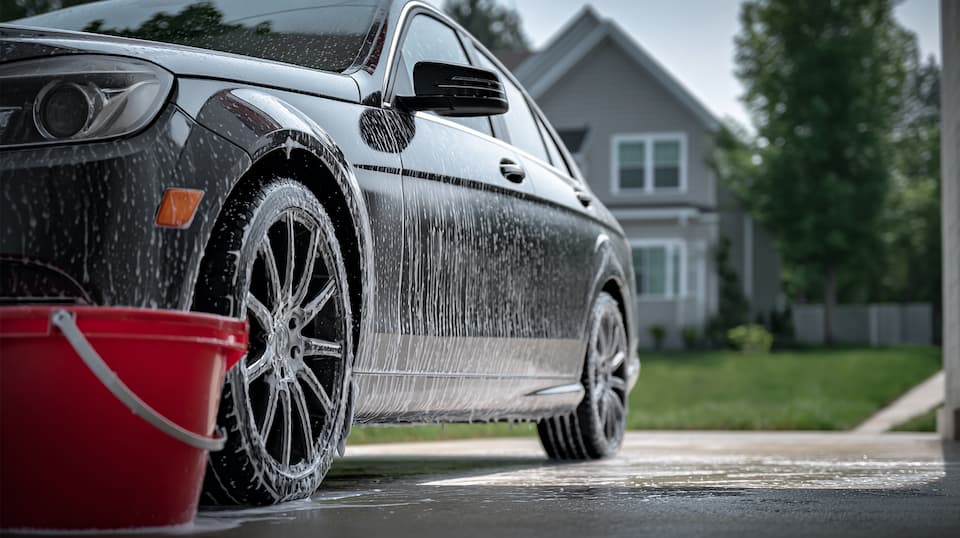
10. Use a Wash Bucket With a Grit Guard Insert
A grit guard (sometimes called a dirt trap) sits at the bottom of your wash bucket and keeps contaminants from mixing back into your soapy water. Without one, the dirt you rinse off the sponge settles in the bucket and gets picked right back up on your next pass. A grit guard is an inexpensive add-on that makes a noticeable difference in preventing wash-induced scratches.
11. Use Spray Wax When Wiping Down Your Car Between Washes
Wiping dust or pollen off your paint with a dry microfiber towel can do more harm than you might think. Even a soft cloth can drag particles across the surface and create fine scratches. Before you wipe, spray the microfiber towel with a quick-detail spray wax first. The wax lubricates the surface and suspends debris so it lifts away instead of grinding into your paint.
12. Dry Your Car With a Clean Chamois or Fresh Microfiber Towel
Drying your vehicle properly is just as important as washing it when it comes to preventing scratches. Use a large, clean microfiber drying towel or a clean chamois to remove excess water and prepare the paint for a final spray wax or sealant application. Avoid using bath towels, beach towels, or any cloth that is not soft and lint-free.
Clean Car, Protected Paint
Taking a little extra time with your car wash routine pays off. Washing your car with the right technique and supplies minimizes the risk of scratches and helps preserve your paint for years to come. When you build these habits into your regular vehicle care, you protect both the appearance and the value of your car.
Frequently Asked Questions
Can an automatic car wash scratch your paint?
Yes. Automatic car washes with spinning brushes can drag dirt across your vehicle's surface and create fine scratches and swirl marks. Touchless car washes are a safer option because nothing physically contacts your paint during the cleaning process.
How often should you wash your car to avoid scratches?
For most drivers, washing every two weeks to once a month is a good balance. Washing too frequently increases the chances of wash-induced scratches because every hand wash involves physical contact with the paint. Adjust your schedule based on your climate and driving conditions.
What supplies do you need to wash your car without scratching it?
You need a dedicated car wash soap, high-quality microfiber towels, a grit guard insert for your wash bucket, separate sponges for the body and wheels, and a spray wax for lubrication between washes. Avoid dish soap, laundry detergent, and rough cloths that can damage your finish.
If your vehicle already has paint scratches or damage from a collision, the team at Crash Champions can help restore your finish. Find a Crash Champions location near you to schedule your free estimate.
The information in this article is provided for educational purposes and may not reflect every situation. While we strive for accuracy, this content is general guidance, not a substitute for visiting your local collision repair provider. For questions about your specific vehicle or repair needs, contact your local Crash Champions team.