What to Include in Your Car Safety Kit
Your car can take you across the country and far from home. That same ability to travel means you could find yourself stranded and in need of help. Packing a well-stocked car emergency kit can help you stay safe and comfortable until help arrives.
What Is a Car Safety Kit?
A car safety kit is a collection of emergency supplies you keep in your vehicle so you are prepared if you get stranded, experience a breakdown, or encounter a roadside emergency. While you cannot predict every situation you might face on the road, having the right supplies in your car gives you the tools to stay safe, signal for help, and handle minor issues on your own.
If you are not sure where to start, consider the condition and age of your vehicle. Think about what issues could come up during long trips and what supplies would help you get back on the road or stay comfortable until help arrives.
You can build your own kit or shop online. Most basic roadside emergency kits cost around $100 or less, depending on what supplies are included. If you drive year-round, consider investing in a summer and winter safety kit you can swap out as the seasons change.
What to Include in a Car Safety Kit
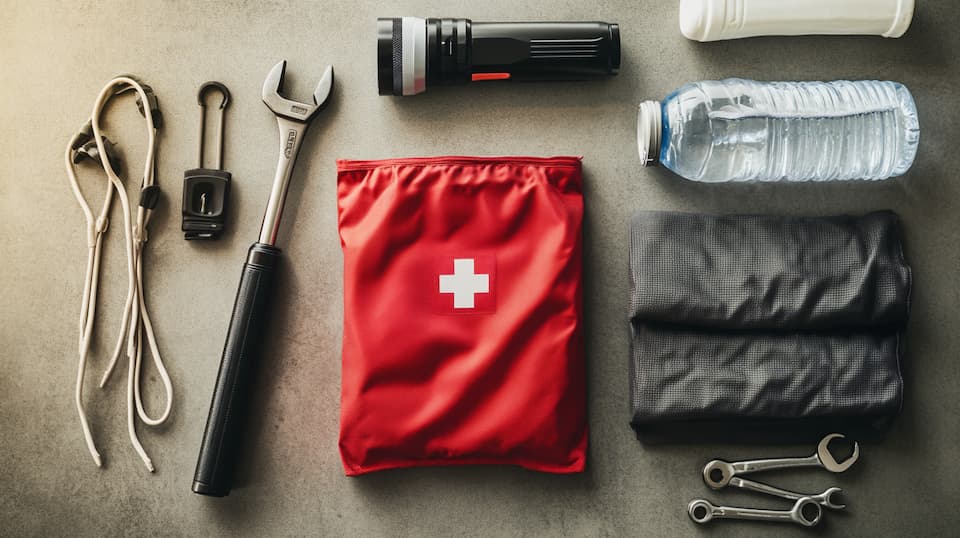
A well-stocked car safety kit covers the basics: tools, first aid, food and water, emergency gear, and supplies to keep you warm and connected. The following list covers the essential items to get started. As you think of things you want to add, keep a running list and update your kit regularly. Storing everything in a large duffel bag or container makes it easy to grab if you get stuck or stranded.
Basic Tools
A set of basic tools can come in handy even when you are close to home. Screwdrivers, hammers, wrenches, pliers, a pocket knife, and a flashlight are all good items to keep in your vehicle. You can also add an ice scraper and a tire pressure gauge to your winter toolkit.
First Aid Kit
A first aid kit is one of the most important items in any car emergency kit. If you find yourself in a situation involving a crash or other injury, having the right supplies can make a critical difference. Consider packing trauma-focused items such as a tourniquet, combat gauze, and a sterile needle and thread for minor wound care. You can also purchase a pre-assembled first aid kit to add to your supplies if you are unsure where to source individual items.
Non-Perishable Food and Bottled Water
Food and water help keep you alert and hydrated while you wait for help during a roadside emergency. Granola bars and bottled water are common additions to car emergency kits, but you can also pack other non-perishable items with long shelf lives. Sports drinks with electrolytes can serve as a good supplement to water.
Emergency Tools
Beyond your basic toolset, you should also keep a few specialized emergency tools in your kit. A seatbelt cutter and an automotive glass breaker can help you exit your vehicle quickly if it ends up in water. A fire extinguisher can help you put out a small fire and potentially signal rescuers. Other helpful items include a compass, tow strap, reflective vest, rain poncho, duct tape, and a tire repair kit.
Gloves
Many of the tasks you may need to handle in an emergency involve using your hands. Sturdy work gloves give you the grip and protection you need to change a tire, clear debris, or build a fire. They also help keep your hands warm in cold temperatures.
Jumper Cables or a Portable Car Jump Starter
Getting stranded does not always mean you are far from civilization. Sometimes it just means your battery has died. Jumper cables or a portable car jump starter can help you get back on the road quickly without waiting for roadside assistance.
Car Fluids
Carrying a bottle of coolant and a quart of engine oil in your safety kit can help you address minor mechanical issues and drive to the nearest service location. Both fluids help keep the engine running if something goes wrong. Even if you are unsure when or how to use them, engine oil can serve a secondary purpose as a fire starter in a survival situation.
Shelter Supplies
An emergency blanket and a tarp can serve as a makeshift shelter if you need protection from rain, wind, heat, or cold. In remote areas, a brightly colored tarp or blanket can also act as a signal to aircraft overhead. Choose a sturdy blanket with insulating properties rather than a standard household blanket for your emergency kit.
Phone Charger
Your smartphone is one of your most valuable tools in an emergency, but the battery will not last forever. Keep a car-compatible phone charger in your kit so you can stay connected, use navigation, or call for help. Make sure the charger works with your vehicle's power source so it is ready when you need it.
How to Maintain Your Car Emergency Kit
Once your car safety kit is assembled, keeping it ready is a matter of checking the contents every one to three months. Replace any food and water that may have expired, recharge or replace flashlight batteries, and restock any supplies you have used. If you keep separate summer and winter kits, swap them out as the seasons change so you are always prepared for the conditions you are most likely to encounter.
Frequently Asked Questions
Where should I store a car safety kit?
Store your car safety kit in the trunk or cargo area where it is easy to access. A duffel bag or hard-sided container keeps everything organized and prevents items from shifting while you drive. Avoid storing your kit under heavy items that could make it difficult to reach in an emergency.
How often should I replace items in my car emergency kit?
Check your kit every one to three months. Replace expired food and water, recharge flashlight batteries, and restock any items you have used. Seasonal changes are a good reminder to review your supplies and swap out summer and winter gear as needed.
Do I need a car safety kit if I have roadside assistance?
Yes. Roadside assistance may take time to arrive, and coverage does not help with every situation. A car safety kit gives you the supplies to stay safe, warm, and hydrated while you wait for help, and it prepares you for emergencies that go beyond a flat tire or dead battery.
Stay Prepared on Every Drive
A well-stocked car safety kit gives you peace of mind and practical tools to handle the unexpected. If your vehicle has been in a collision and you need professional repairs to get it road-ready again, Crash Champions can help. Find your nearest location to schedule a free estimate.
The information in this article is provided for educational purposes and may not reflect every situation. While we strive for accuracy, this content is general guidance, not a substitute for visiting your local collision repair provider. For questions about your specific vehicle or repair needs, contact your local Crash Champions team.