Wheel Alignment: What It Is, Why It Matters, and When You Need One
The purpose of a wheel alignment is to ensure that your car's wheels, and by extension your tires, contact the road surface at the proper angle to ensure your car drives forward in a straight line. Failure to travel down the road in proper alignment can result in damage to critical suspension components and your wheels and tires. The guide below includes everything you need to know about wheel and tire alignment, including relevant terms and how to diagnose when your car needs to be professionally aligned.
What is a Wheel Alignment?
A wheel alignment is a maintenance service that adjusts your vehicle's suspension angles so your tires contact the road evenly and your car drives in a straight line. Technicians reset various suspension parameters on your vehicle to promote proper alignment. A wheel alignment is typically preceded by a wheel alignment check, which determines whether a full alignment service is in order.
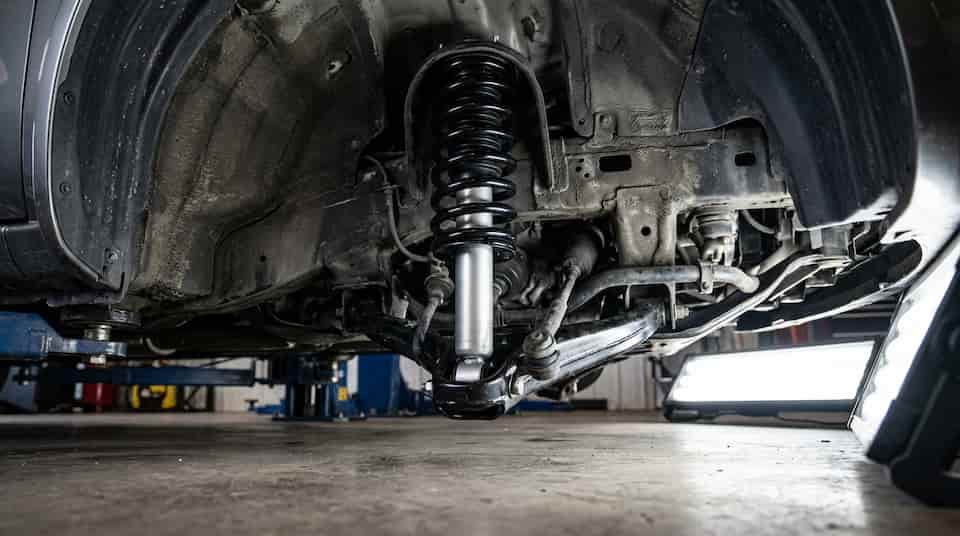
Typically, technicians begin by measuring the vehicle suspension's location and comparing those specifications to the parameters recommended by the manufacturer. Techs will also review your vehicle's camber, caster, and toe, which we'll discuss in the next section, and tire wear. They may also inspect your car's suspension and steering components, which may include the following depending on your vehicle's make and model:
- Ball joints
- Bushings
- Center links
- Coil springs
- CV axle shafts
- CV joints/boots
- Idler arms
- Rack and pinion units
- Shock absorbers
- Struts
- Sway bar links
- Tie rod ends
- U-joints
When talking about wheel alignment and getting your wheels aligned, it's essential to note road crowning. One free yet slightly flawed method of determining if your car needs a wheel alignment service involves driving down the road and removing pressure from your steering wheel to see if your vehicle tracks to the left or right. If you're driving on a crowned road, those results are extremely flawed.
Crowning represents a structural component used by road builders to encourage precipitation to drain from the road's surface toward the gutter via gravity. Thus, the road is sloped downward at a specific angle to prevent water pooling and conditions that contribute to hydroplaning. If you drive in the right lane on some streets, the crowning can draw your car to the right naturally due to the angle, but this road feature can even affect vehicles in the left lane in some cases.
ADAS Calibration and Wheel Alignment
Modern vehicles rely on Advanced Driver Assistance Systems (ADAS), technology that uses cameras, sensors, and radars to help keep you safe on the road. These systems power features like forward collision warning, lane departure alerts, and adaptive cruise control. After a wheel alignment or collision repair, these systems may need recalibration to function correctly. Review your owner's manual or speak to a certified technician to determine if your vehicle requires ADAS calibration after an alignment.
Two-Wheel vs. Four-Wheel Alignment Service
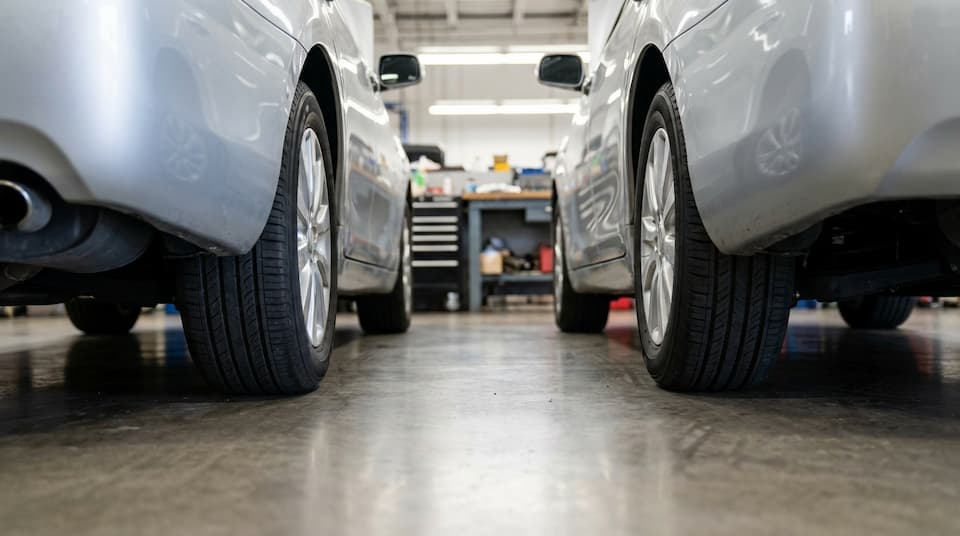
With a few exceptions, regular wheel alignment services include adjusting all four wheels. Two-wheel alignments are less common than they used to be and are typically only performed on the front axles of cars with a fixed rear axle. Four-wheel alignments ensure all four wheels point in the right direction.
Important Wheel Alignment Terms
Most repair shops use computerized wheel alignment technology to measure the angles and distances required to calculate whether a car's wheels are correctly aligned. These machines typically measure camber, caster, and toe, which are defined below, and can also detect misalignment.
Camber
If you've seen sporty vehicles with their wheels turned up towards the sun, you already know something about (negative) camber. A wheel's camber describes the inward or outward angle it takes when viewed from the front of the vehicle, similar to how you might adjust a satellite dish to be turned up more toward the sky or ninety degrees to the earth. Negative camber means the top of the tire tilts down toward the engine, while positive camber moves the bottom of the tire toward the engine.
Caster
Wrapping your head around a wheel's caster can require a bit more imagination. Caster involves the steering axis, easily visualized by drawing a line from the ground up through the center of the wheel and comparing it to the location of the suspension components. Positive caster occurs when the steering axis tilts down toward the driver, while negative caster means the steering axis tilts toward the front of the vehicle.
Toe
Wheel toe describes how turned in or out the wheels are when looking at the vehicle from a bird's-eye view. Toed-in wheels turn toward the engine at the front-most part of the tire, similar to if you were to bring your toes together while standing in place. In contrast, toed-out wheels splay outward away from the car, meaning your toes would be pointed to either side of you rather than forward or in.
How Does a Proper Alignment Affect Tire Wear?
An incorrect alignment can prematurely deteriorate tires by wearing them unevenly across the tread. Think of a rolling pin running across dough; the ideal rolling method is to move forward equally with both hands, applying the same pressure downward and equal momentum forward. Any stray movement or unequal pressure can make the rolling pin dig into the dough, flatten one side more than the other, or only roll part of the dough out, leaving the rest uneven.
When your car's wheels are correctly aligned, it's similar to the rolling pin moving across the dough in a straight line, with equal pressure forward and down. However, you can determine which element of your alignment is off by how it affects your car's tire tread. For example:
- When one side of the tread is worn, and the other is still ridged, this is called feathering, and it is caused by poor toe alignment.
- Camber wear occurs when the inside (negative camber wear) or the outside (positive camber wear) of the tread experiences more wear than the center.
- Underinflating or overinflating your tires can cause heel or toe wear, which results in one side of the tread wearing out faster than the other.
It's essential to check your tires regularly for irregular wear to ensure proper wheel alignment. You can easily incorporate this visual inspection into your routine tire maintenance. Gauging tire pressure and overall condition helps you prevent breakdowns rather than react to them.
How Often Should You Get Wheel Alignments?
You should have your wheel alignment checked every six months or every 6,000 miles, whichever comes first. If you don't drive very far, use the six-month interval as your guide. However, the following symptoms can also signal your car may have alignment issues:
- Your car pulling to one side
- Hitting a pothole or curb
- Your tires are unevenly worn
- Your steering wheel isn't properly aligned while driving straight
- Your steering wheel shakes or vibrates
- Your tires squeal at low speeds
It's best to get an alignment check as soon as possible after experiencing these issues. Prolonging the problem will only worsen it and could potentially cause additional damage.
Frequently Asked Questions
How do I know if my car needs a wheel alignment?
Common signs include your car pulling to one side, uneven tire wear, a steering wheel that vibrates or isn't centered when driving straight, and tires that squeal at low speeds. If you've recently hit a pothole or curb, it's a good idea to have your alignment checked.
How often should I get a wheel alignment?
Have your alignment checked every six months or every 6,000 miles. You should also get it checked after hitting a pothole, curb, or any impact that could shift your suspension.
What's the difference between a two-wheel and four-wheel alignment?
A four-wheel alignment adjusts all four wheels and is the standard for most modern vehicles. A two-wheel alignment only adjusts the front axle and is typically reserved for older vehicles with a fixed rear axle.
Keep Your Vehicle Aligned and Road-Ready
A wheel alignment can help extend the life of your vehicle's suspension, tires, and steering components. If your vehicle needs a wheel alignment or you've noticed uneven tire wear after a collision, Crash Champions can help. Find your nearest location to schedule a free estimate.
The information in this article is provided for educational purposes and may not reflect every situation. While we strive for accuracy, this content is general guidance, not a substitute for visiting your local collision repair provider. For questions about your specific vehicle or repair needs, contact your local Crash Champions team.