Why Timing Belt Replacement Is Vital to Your Car's Longevity
Your timing belt keeps critical engine components working in sync. When it wears out or breaks, the damage can be severe and expensive. Use this guide to learn why timing belt replacement matters, how to spot the warning signs, and when to schedule a replacement.
Why Is Timing Belt Replacement Vital to Your Vehicle's Longevity?
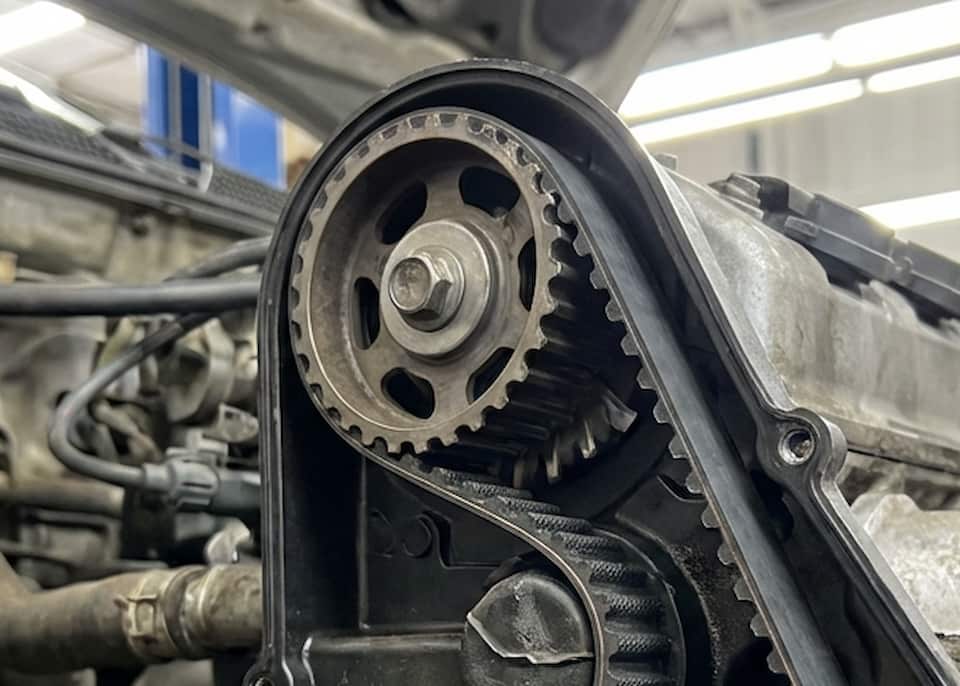
A timing belt is a rubber belt reinforced with fibers that synchronizes your engine's internal components so they operate at precisely the right moment. It is located near the front of the motor, behind the timing cover, and it keeps the engine's mechanical timing on track so your vehicle runs smoothly. Without a functioning timing belt, your engine can lose fuel efficiency and, in severe cases, suffer serious internal damage.
The timing belt controls key components such as the intake and exhaust valves. It dictates when these valves open and close to maximize the energy released into the combustion chamber. Your car's camshaft and water pump also turn based on the timing belt's position.
If the timing belt breaks or slips out of alignment, the engine's internal components can collide and potentially cause catastrophic damage. Timing belts degrade over time due to heat, friction, age, and contaminants. The belt can also rip or jump off its track entirely, resulting in a costly repair bill.
Timing belt replacement requires precise tension and expert alignment, so it is a good idea to have a qualified technician handle the job if you have not done one before. Replacing the timing belt involves more than slipping a new belt onto a few teeth. The new belt must be carefully positioned so the engine timing aligns correctly with all internal components.
Timing Belts vs. Timing Chains
Timing belts and timing chains perform the same job: they synchronize your engine's internal parts for smooth performance and fuel efficiency. The key difference is the material they are made from and how often they need replacement.
Timing belts are made of durable rubber reinforced with fibers for strength. On one side, alternating ridges and valleys (called teeth) grip the corresponding teeth on the crankshaft and camshaft pulleys. As these pulleys turn, the timing belt moves with them, driving every connected component.
Most timing belts require replacement every 60,000 to 100,000 miles, depending on your vehicle and driving conditions. Vehicles with higher mileage may need a replacement sooner, and belts can still fail unexpectedly well before their scheduled interval.
Timing chains are made of metal, typically steel. They are more durable and generally last about twice as long as a timing belt. This added longevity reduces long-term maintenance costs. However, timing chains tend to be noisier during operation and cost more to replace when the time comes.
While timing belts run more quietly, they do require more frequent maintenance based on their rubber composition. Your vehicle is designed for one or the other from the factory. You cannot swap a timing chain onto an engine built for a timing belt, or vice versa, without risking engine damage.
When to Replace Your Car's Timing Belt
The most reliable way to know when your timing belt needs replacement is to check your owner's manual for the manufacturer's recommended interval. Following this schedule, even if the belt does not look worn yet, helps you avoid expensive repairs if the belt fails unexpectedly.
Between scheduled replacements, you can also inspect the timing belt for early signs of wear. Look for belts that have lost their flexibility or show visible cracking, fraying, or ripping. Any of these signs mean you should replace the belt right away.
If you are already having other engine work done, consider replacing the timing belt at the same time. For example, if you plan to replace the water pump, having the timing belt swapped out during the same service can save time and labor costs since the technician is already working in the same area of the engine.
Pay attention to warning signs from your engine. Misfires, unusual noises, or a check engine light could all point to a timing belt issue. Have a professional diagnose the root cause before proceeding with a replacement, since more extensive repairs may be needed.
Finally, if you have recently purchased a higher-mileage vehicle, it is a good idea to inspect and replace the timing belt as a precaution. A fresh belt gives you one less thing to worry about and can go a long way toward extending your vehicle's life.
Keep Your Car's Timing Belt in Good Shape
Timing belt replacement is one of the more straightforward engine maintenance tasks, but it can quickly become expensive if a worn belt causes additional damage. Now that you understand why timing belt replacement matters and when to schedule it, you can take a proactive approach to keeping your vehicle running reliably for the long haul.
Frequently Asked Questions
How much does it cost to replace a timing belt?
Timing belt replacement costs vary depending on your vehicle's make, model, and whether additional components like the water pump are replaced at the same time. A qualified technician can evaluate your vehicle and provide a detailed estimate before any work begins.
What happens if you don't replace your timing belt?
If a timing belt breaks while your engine is running, internal components like the valves and pistons can collide, potentially causing severe engine damage. In many cases, the cost of repairing this kind of damage far exceeds the cost of a routine timing belt replacement.
Does my car have a timing belt or a timing chain?
Your owner's manual will tell you whether your vehicle uses a timing belt or a timing chain. Many newer vehicles use timing chains because they last longer, but plenty of cars on the road still rely on rubber timing belts that require periodic replacement.
If your vehicle needs engine maintenance or collision repair, Crash Champions can help. Find your local Crash Champions repair center to schedule a free estimate today.
The information in this article is provided for educational purposes and may not reflect every situation. While we strive for accuracy, this content is general guidance, not a substitute for visiting your local collision repair provider. For questions about your specific vehicle or repair needs, contact your local Crash Champions team.